Artist description
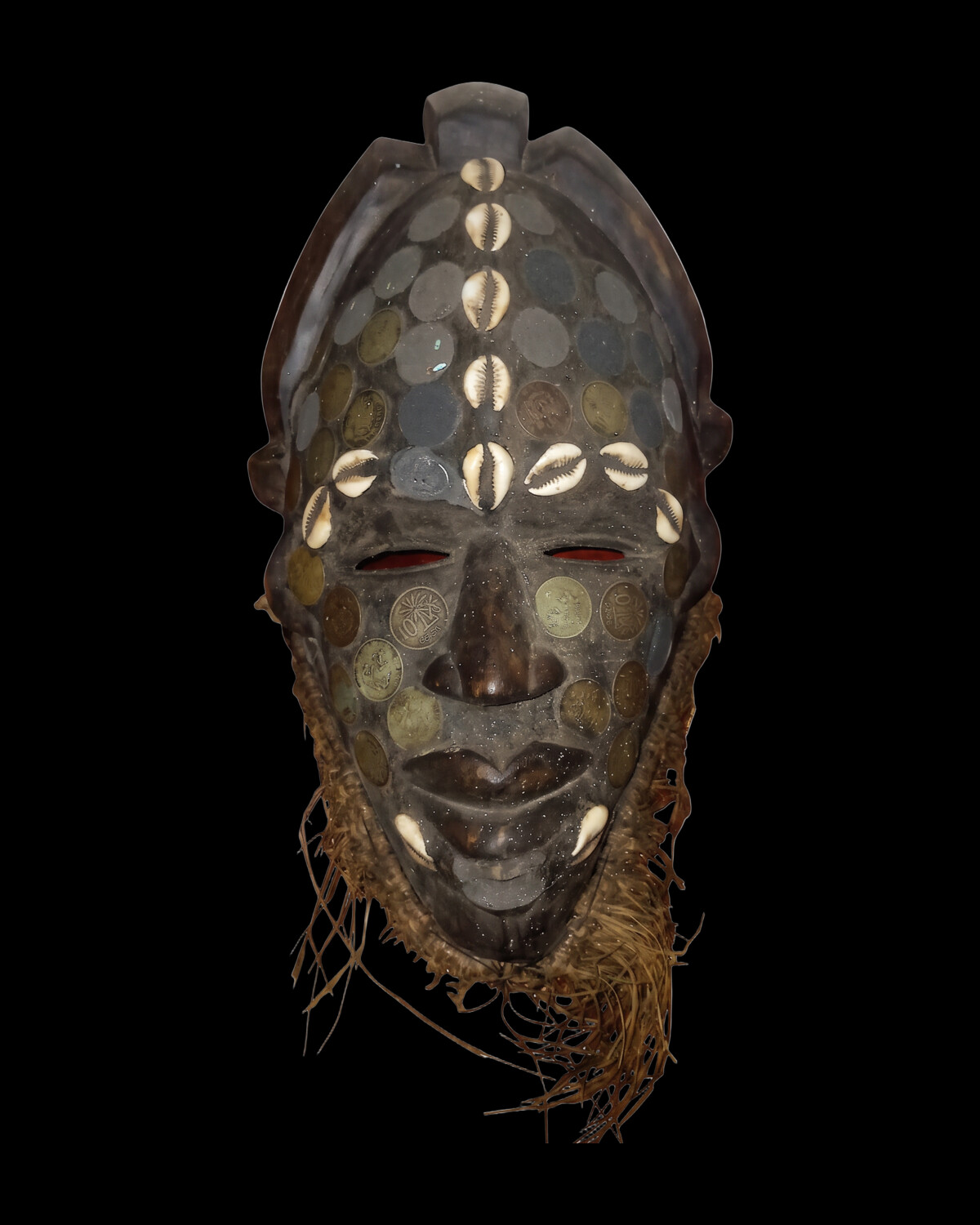
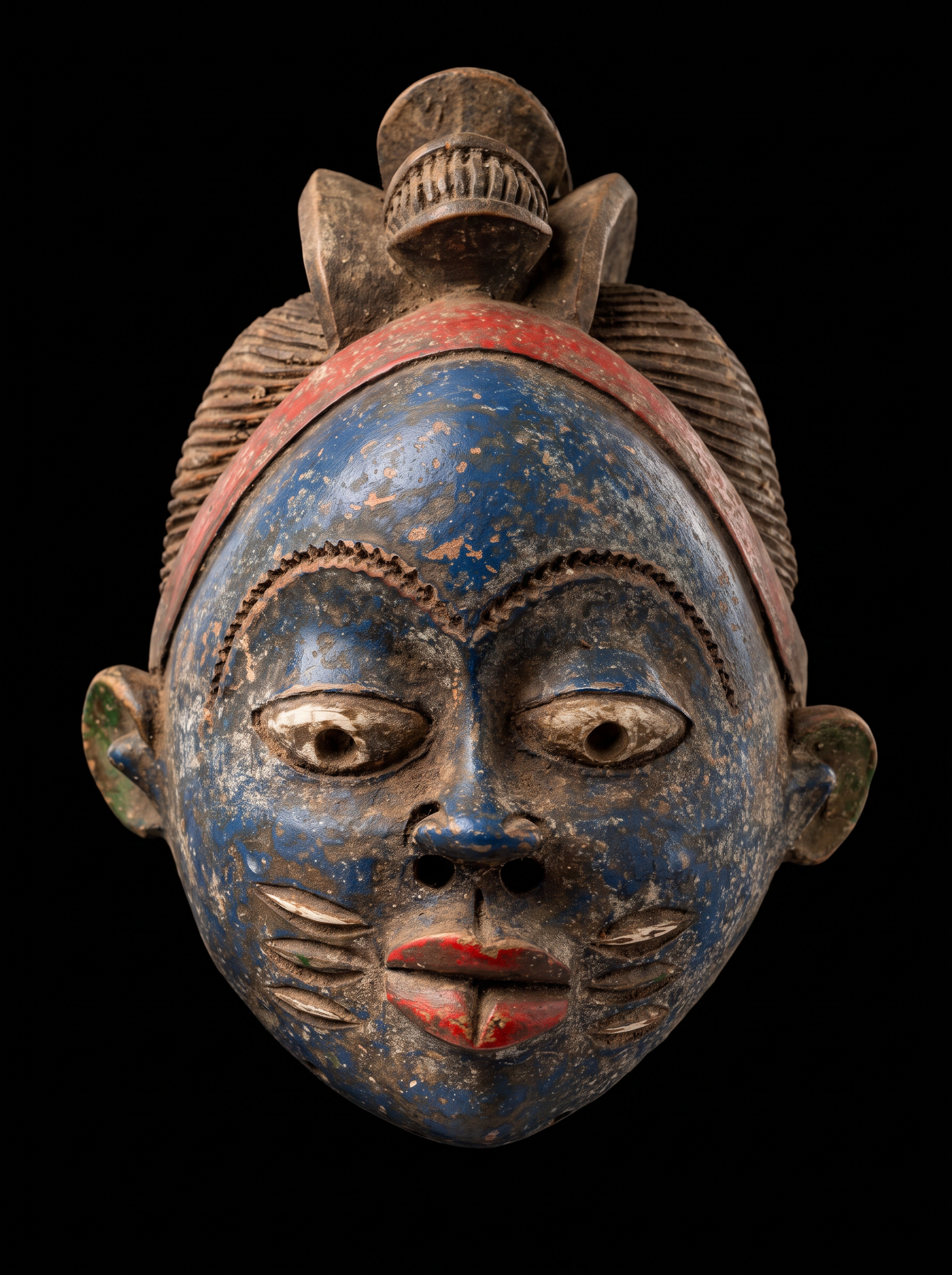
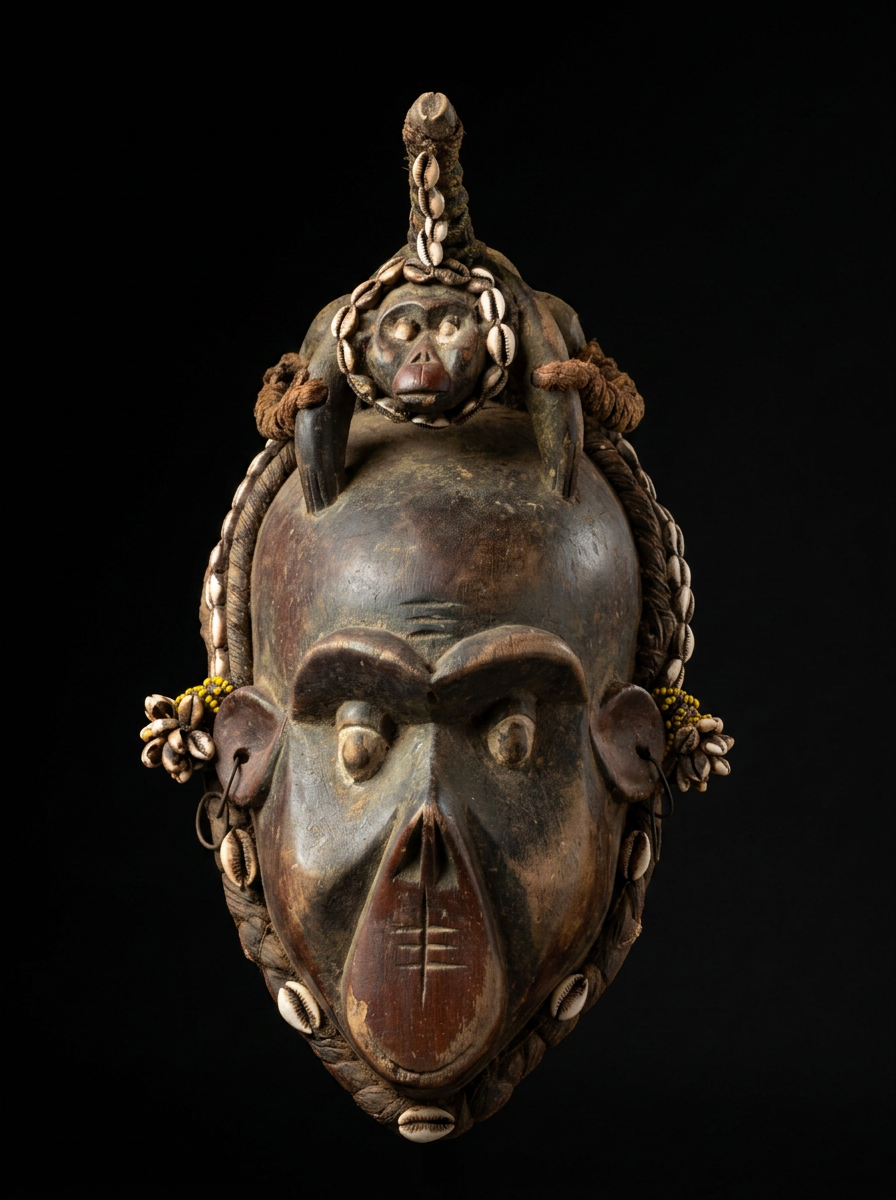
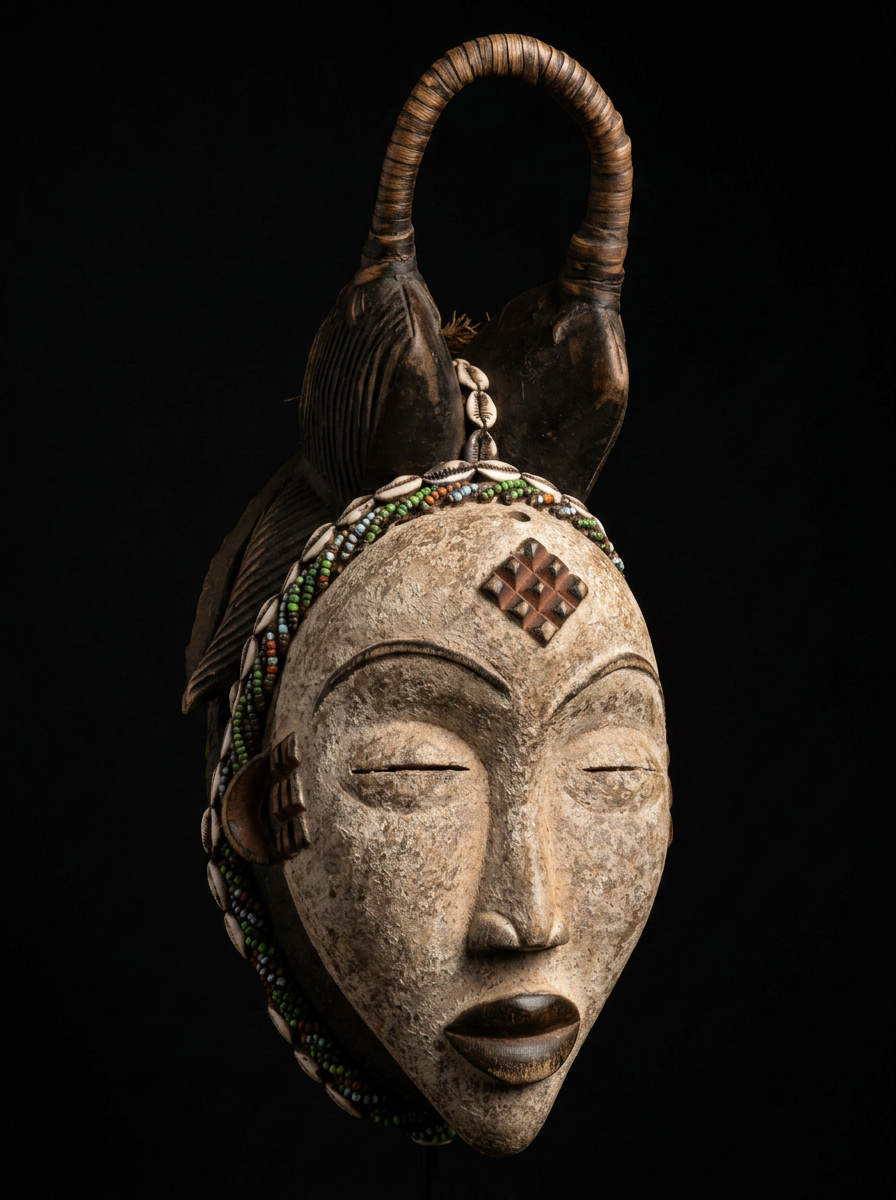
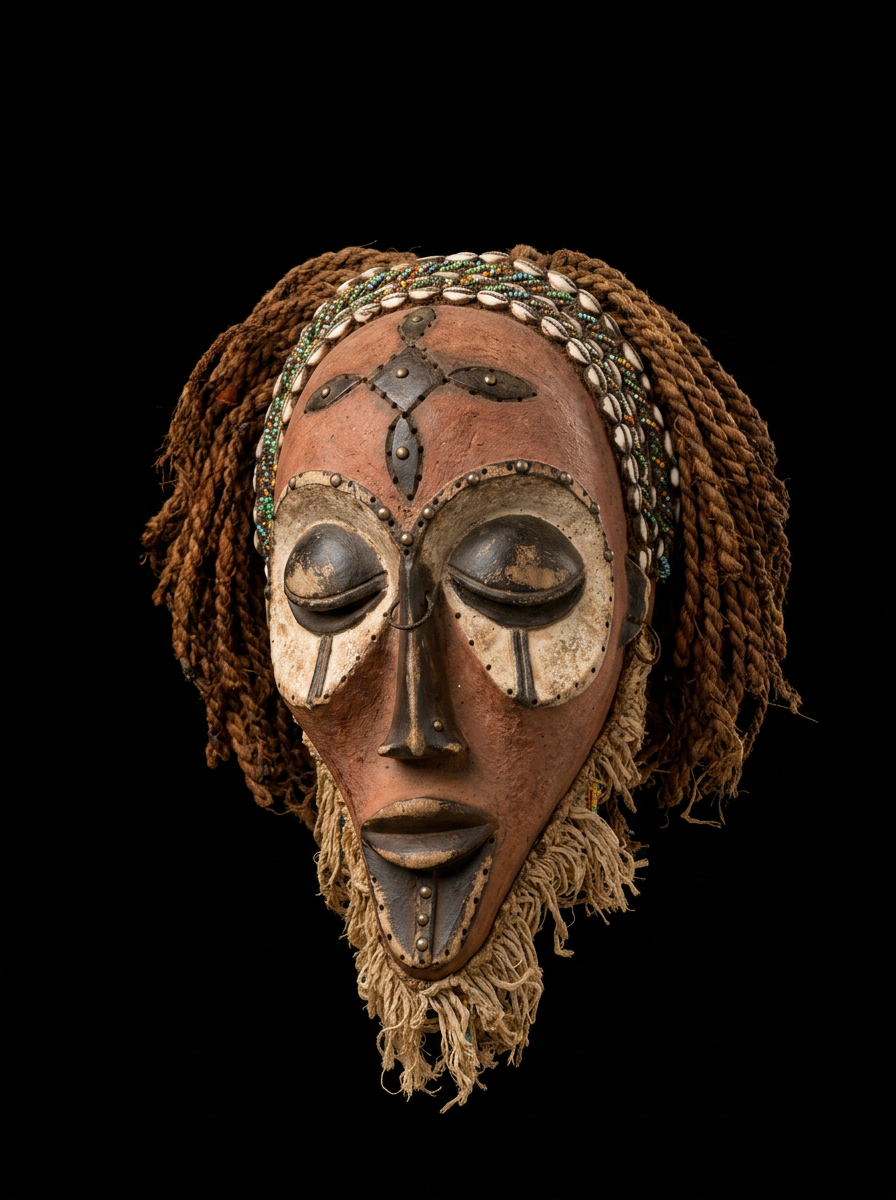
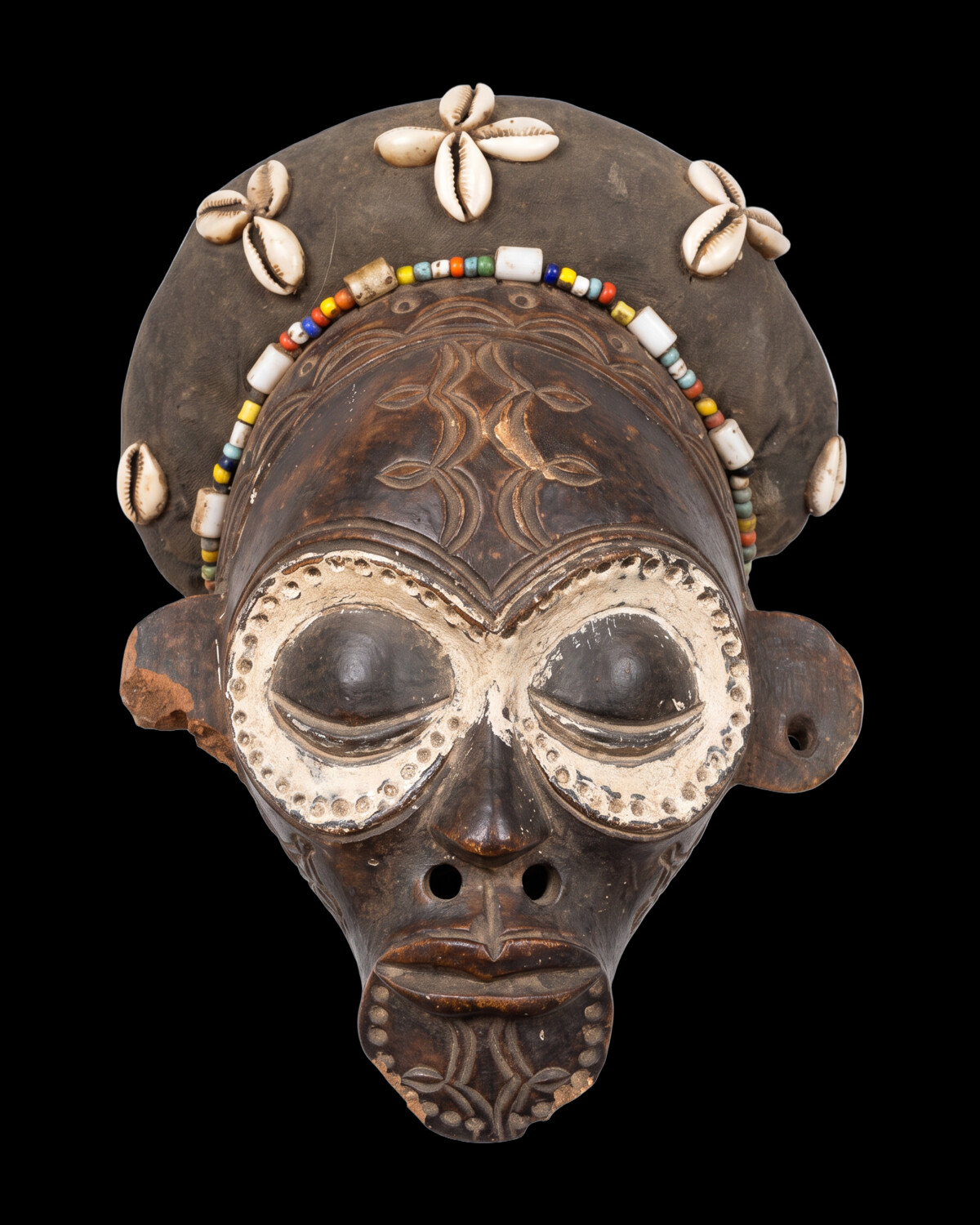
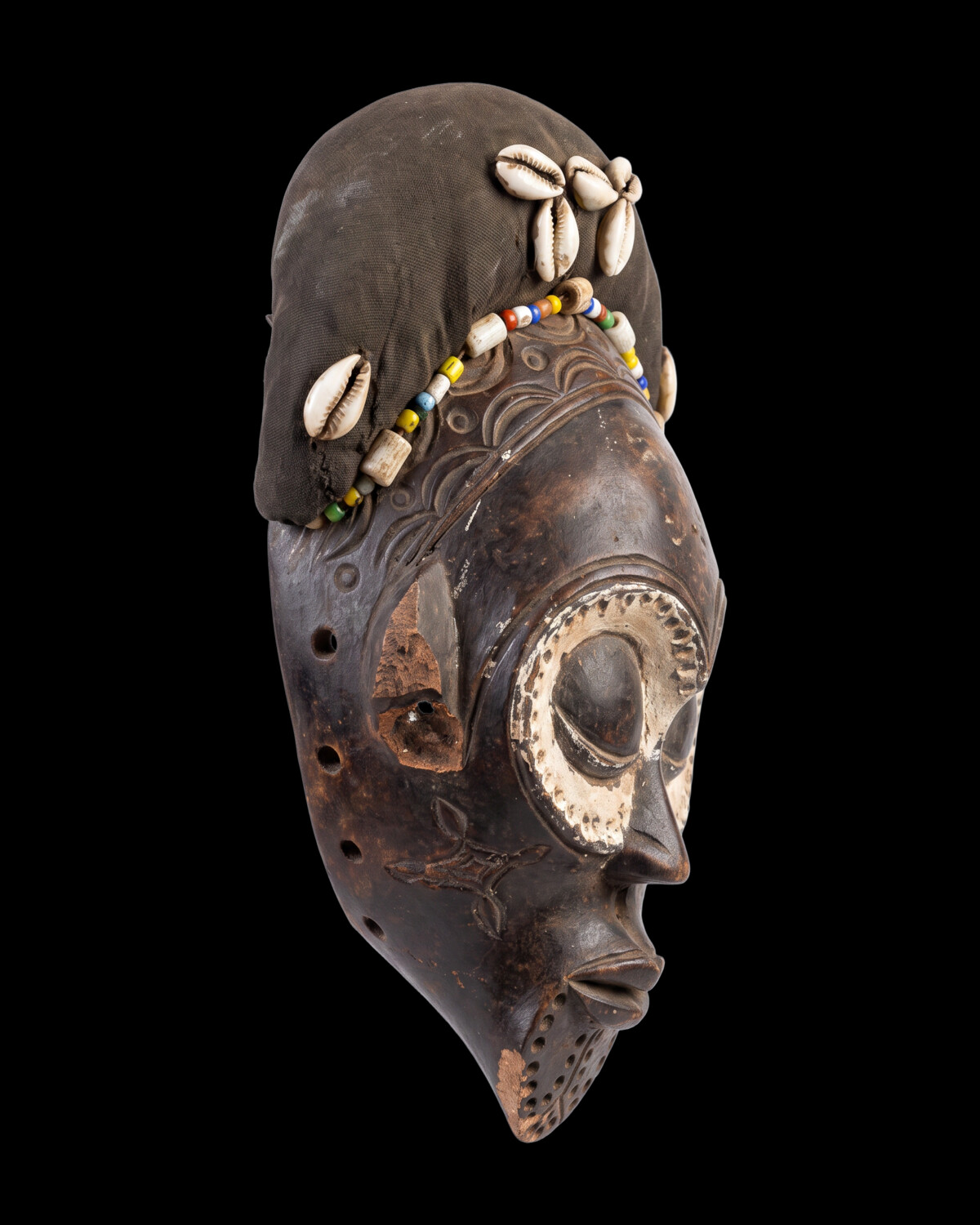
This one was made for a courtyard, not an open field. Thin walls, a short jaw, light enough to wear for an hour without your neck complaining — the work of a carver who had made many and no longer hesitated. Masks of this scale were danced close to people: inside a compound, at the funeral of a family head, where the crowd stands near enough to see the shells and do the arithmetic.
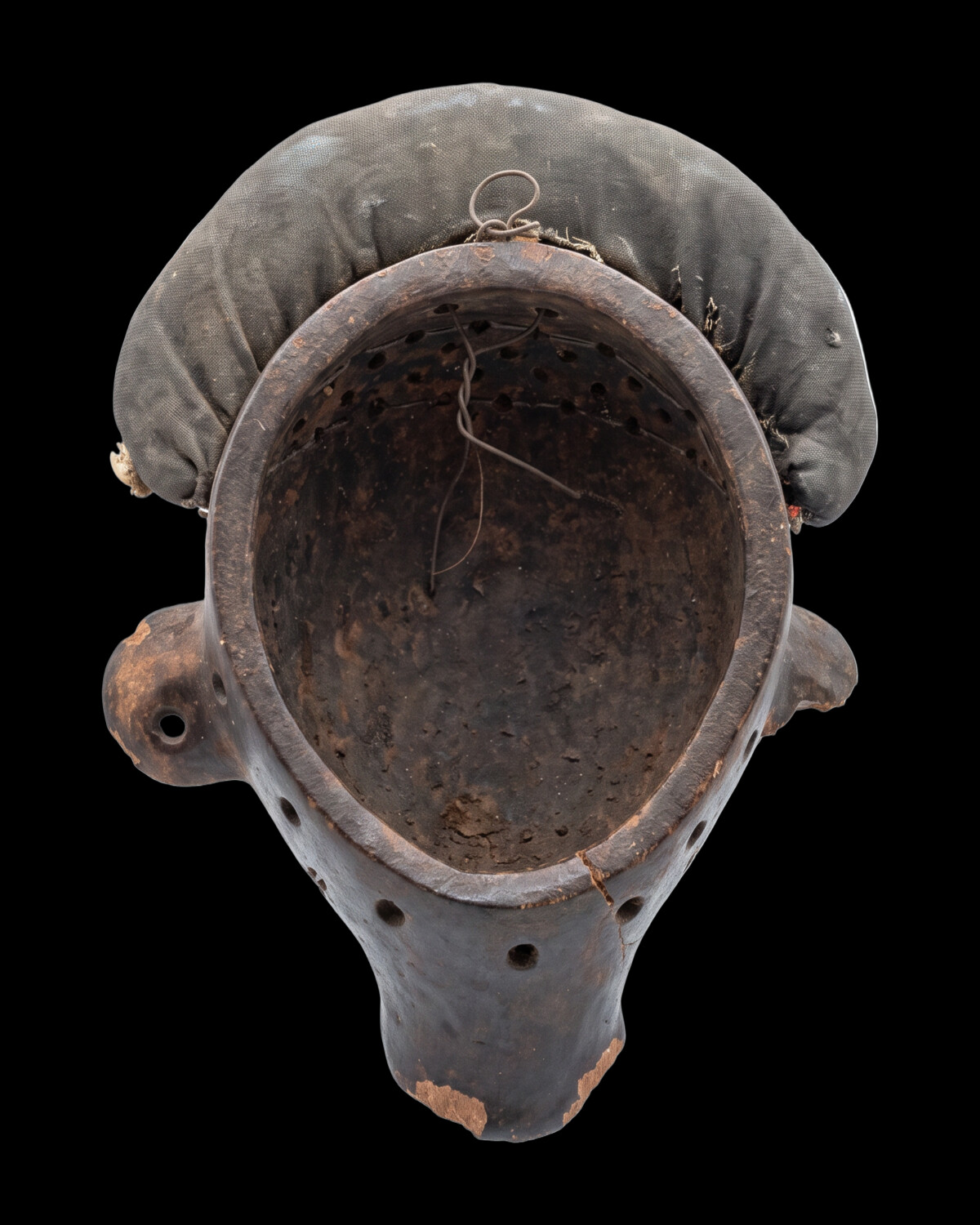
All the money went upward, into one unbroken arc of cowries and coins riding forward of the brow, so it catches the light before the face does. That was deliberate. A man arriving in a mask like this was announcing a household, not a spirit. Turn it over and the hollow is polished smooth where cheekbones pressed, the cord holes stretched from years of tying and untying against a raffia hood. No society name survives with it, no dance. Only a practised hand, and the evidence of a real face inside.