Artist description
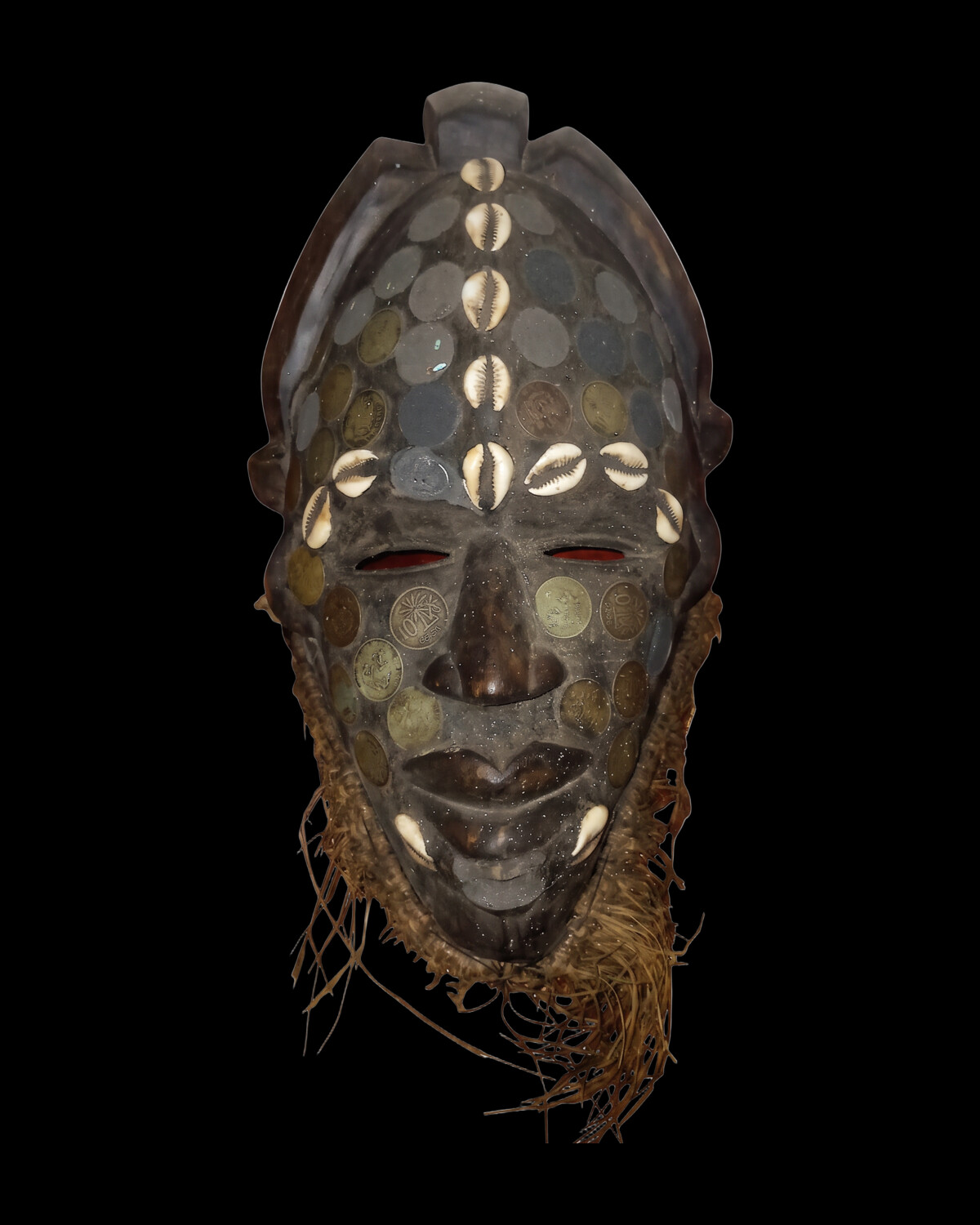
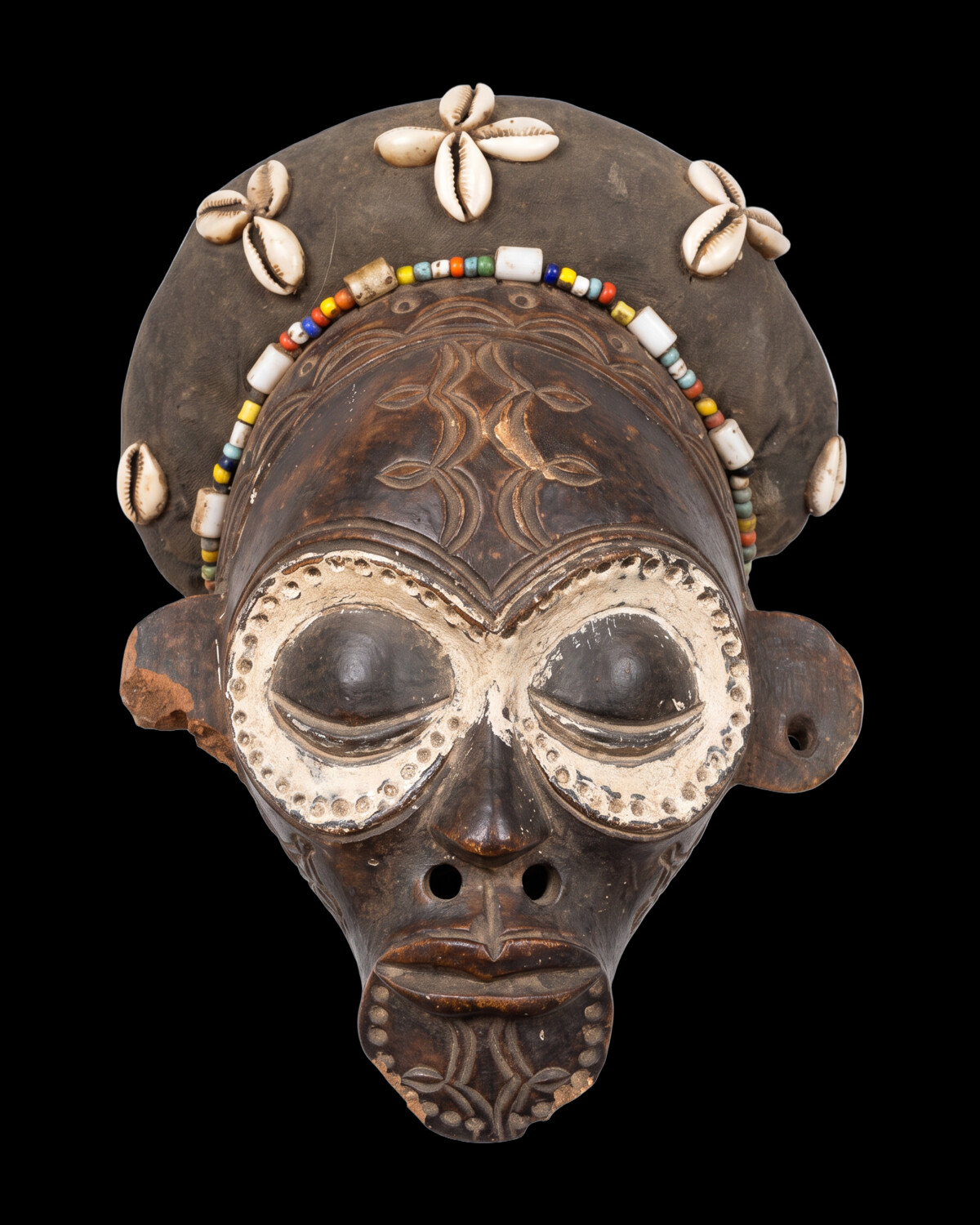
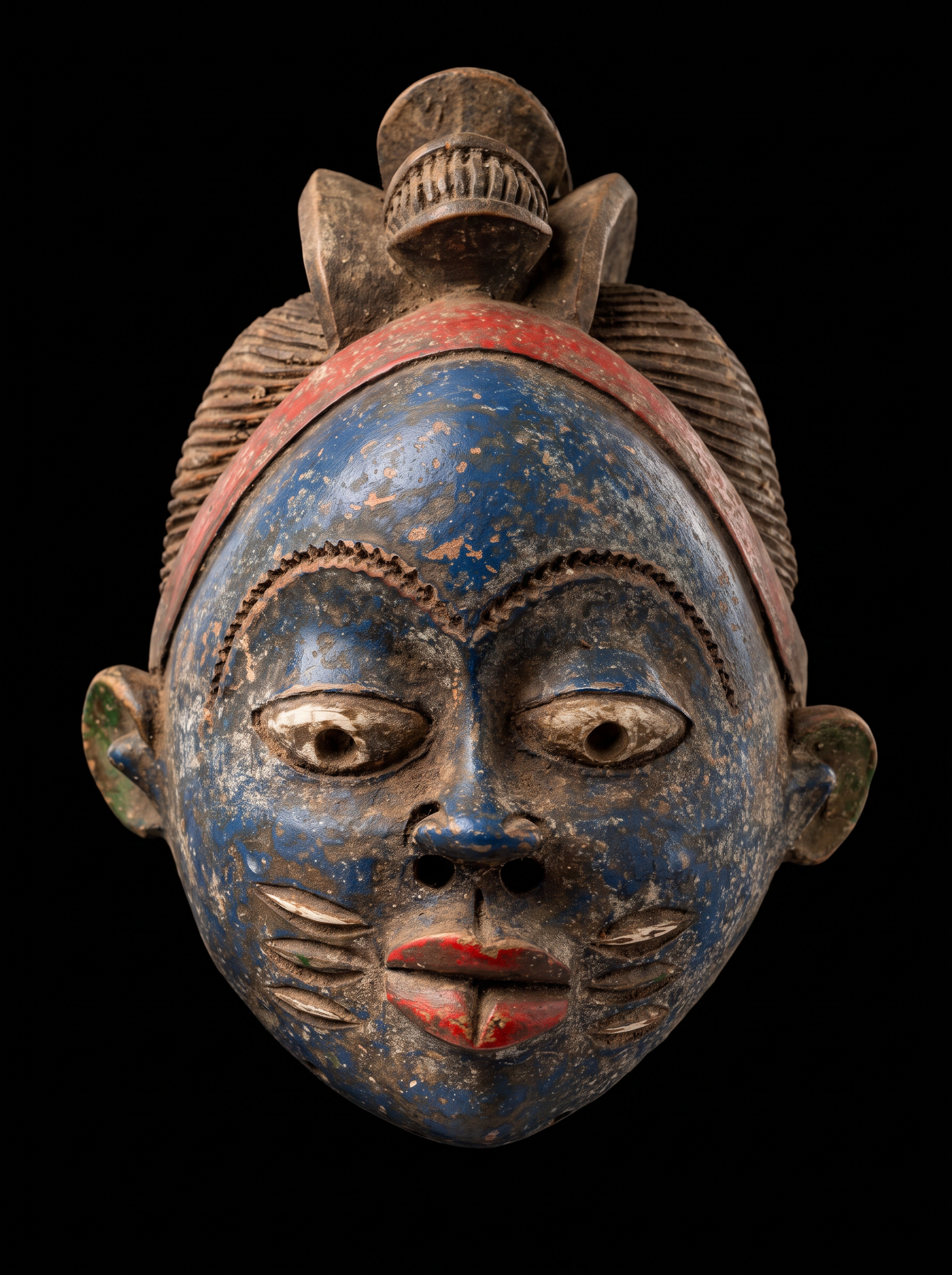
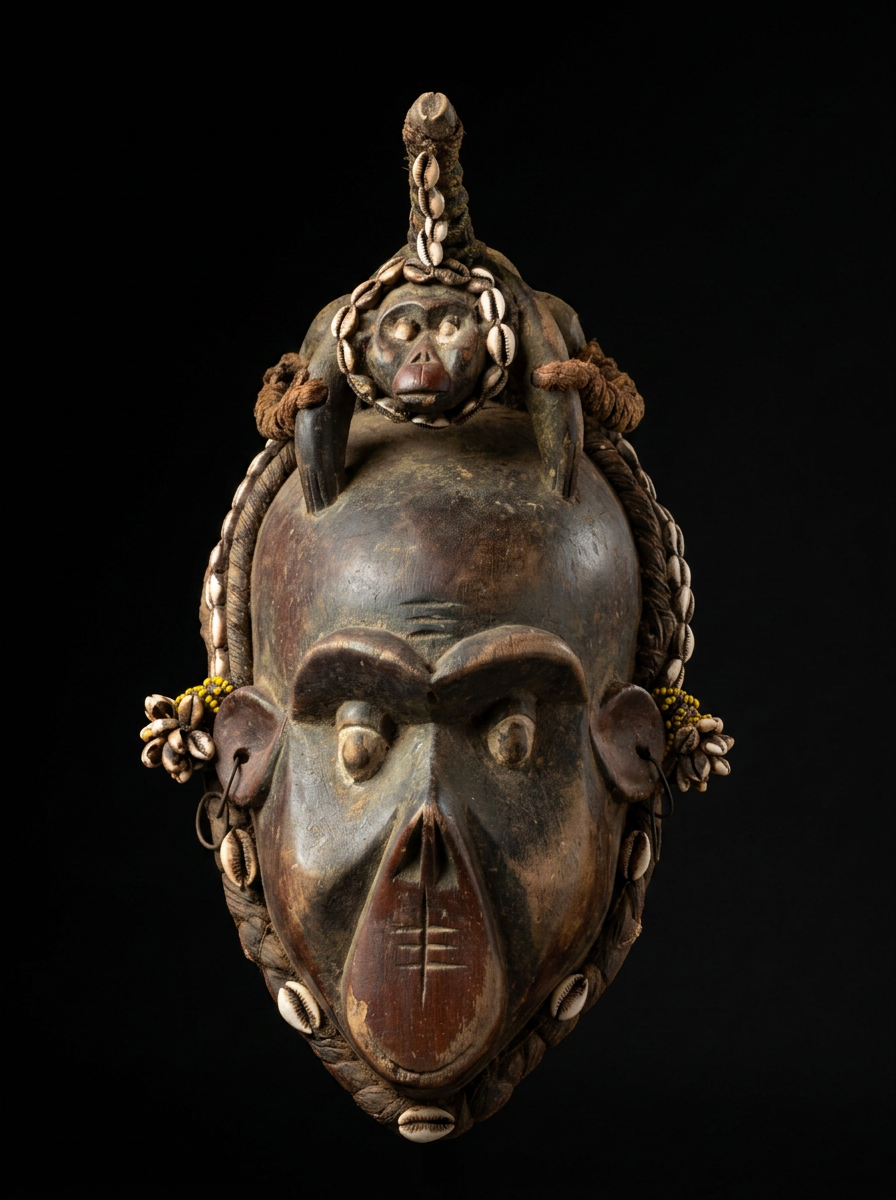
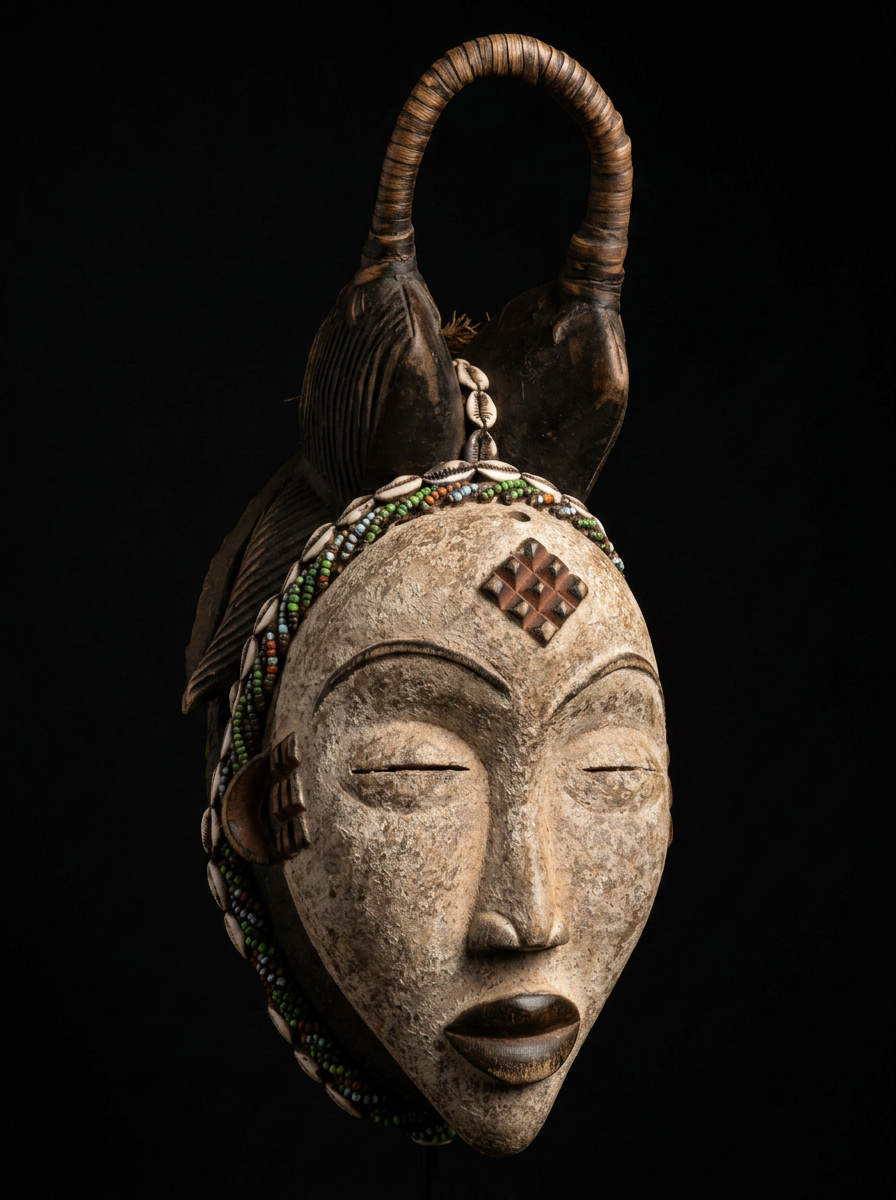
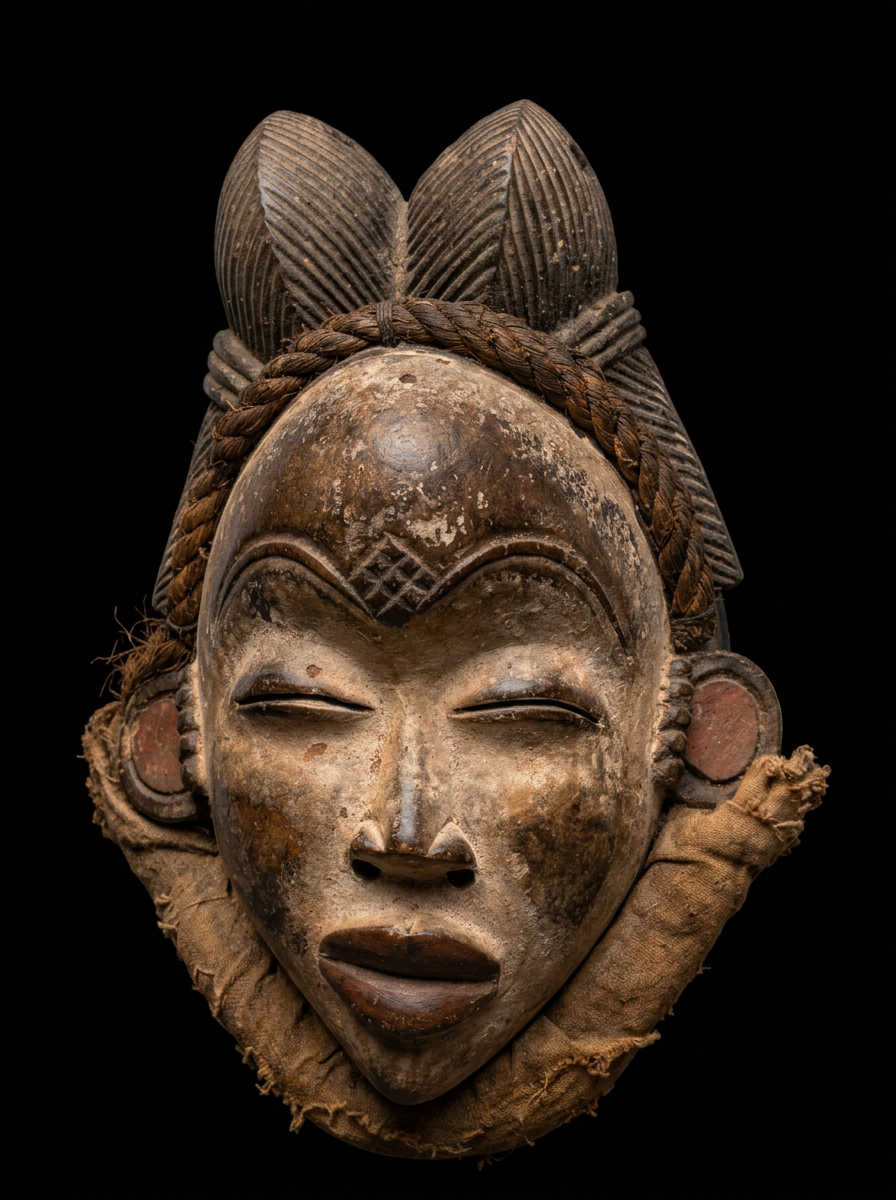
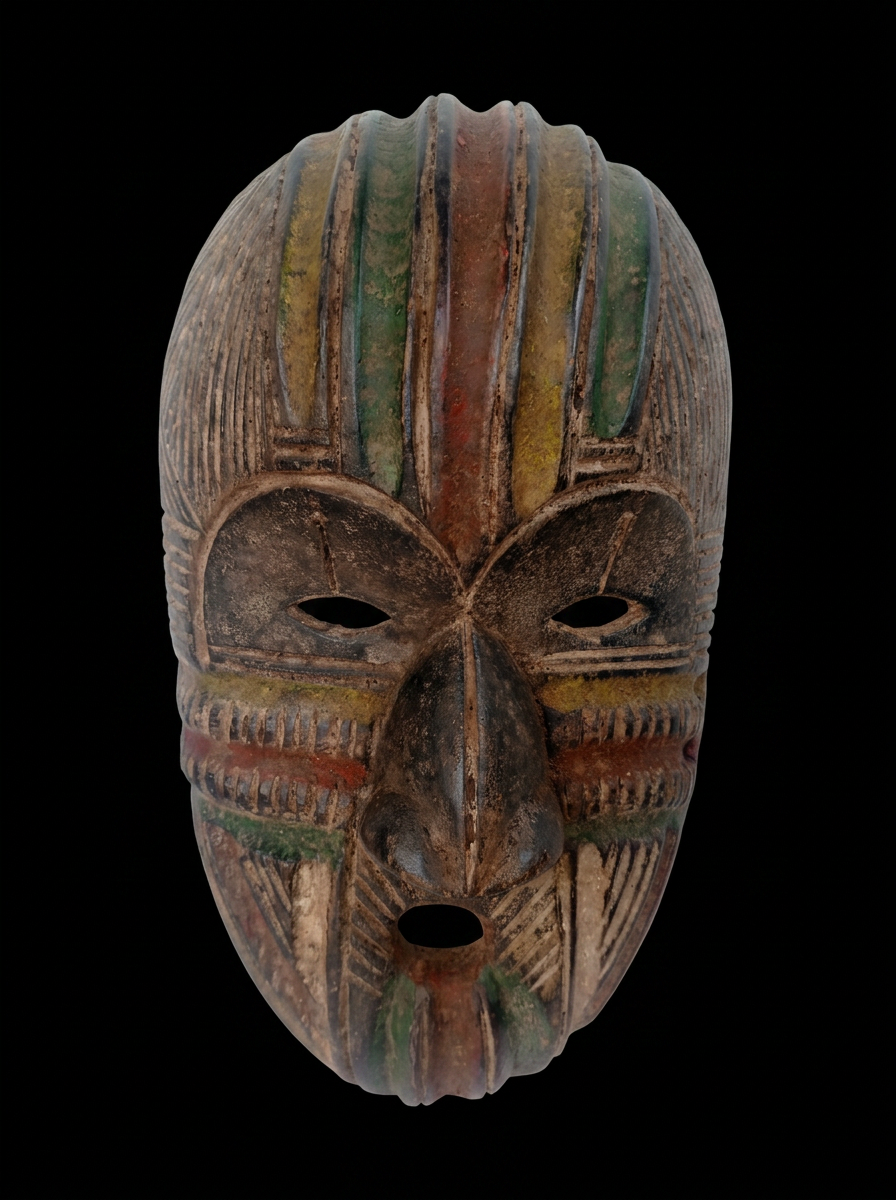
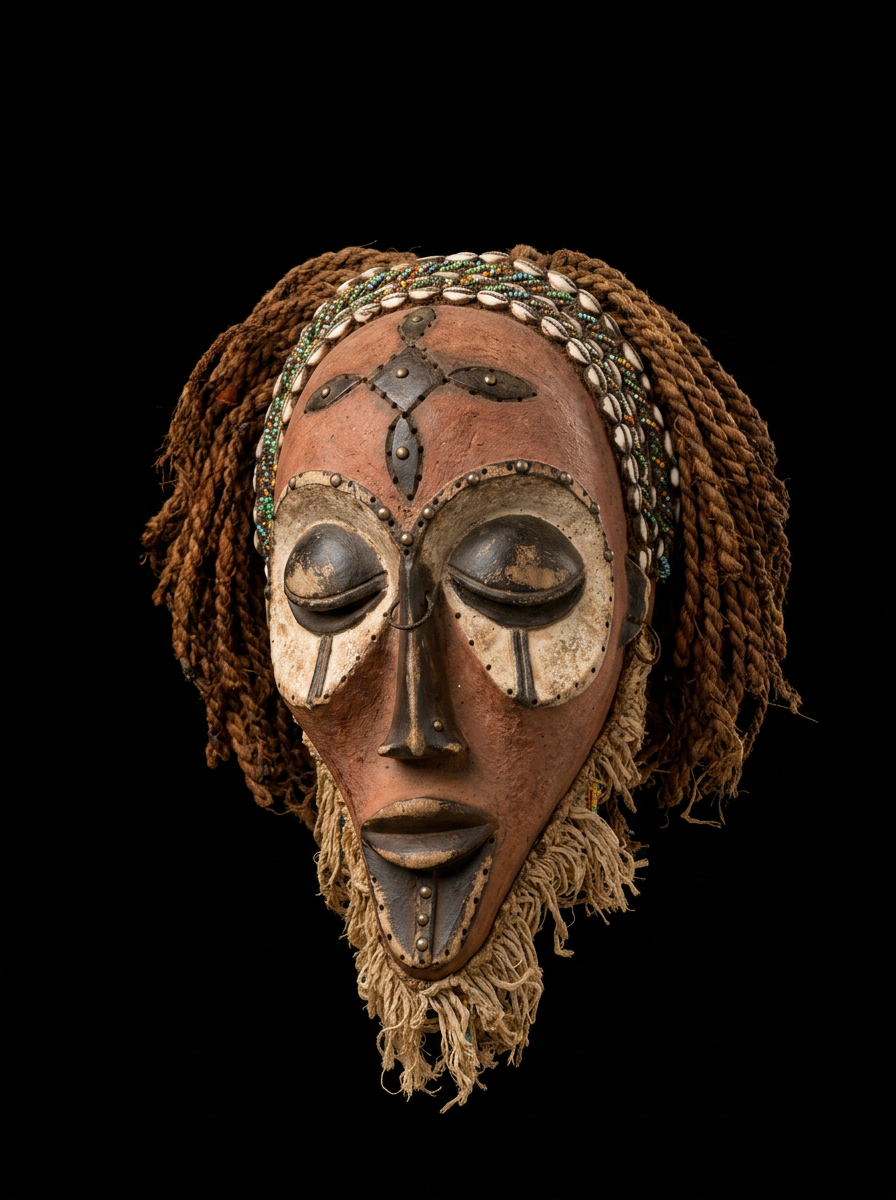
I would rather describe this one honestly than dress it in a lineage it may not have. No papers tie it to a people, a society or a dance, and the carving argues with every confident guess I have heard made about it. What I can tell you is how masks of this kind lived: not on walls, but in the roof smoke of a keeper's house, taken down a few times a year, dressed in fibre and cloth until no part of the dancer showed, and sent out to a compound where the drums told everyone what was arriving.
What is certainly here: rounded eyes, a raised mark between the brows, a headband of cowries and beads, and an ochre surface rubbed and fed with oil for years. The fibre coiffure is not original, and it never is. Fibre is replaced the way thatch is replaced, and a mask that kept getting new hair was a mask still working. Brass at the rim catches lamplight and makes the face seem to shift when nothing has moved, which was the whole point after dark. A workshop piece, well made, well used, and quiet about the rest.