Artist description
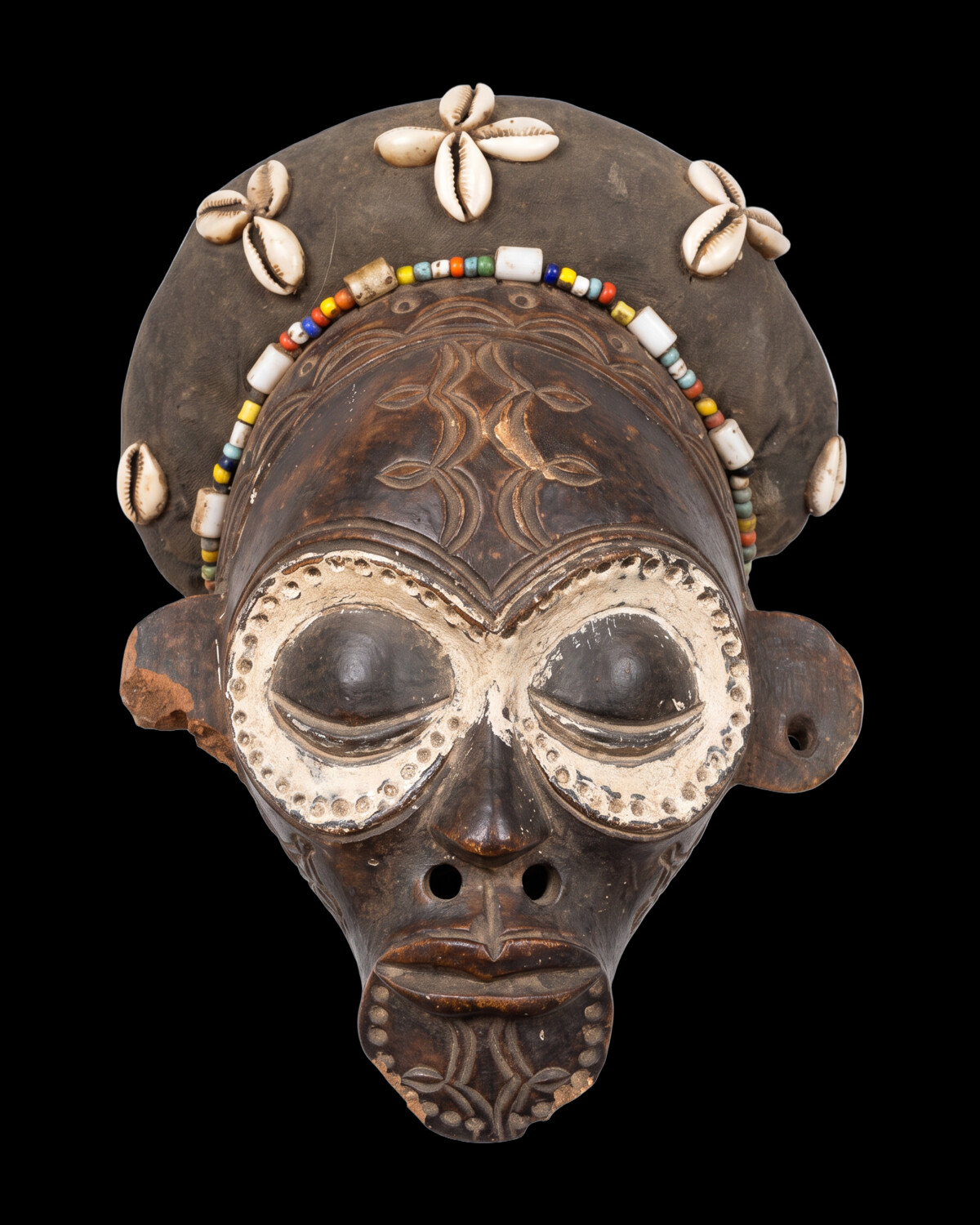
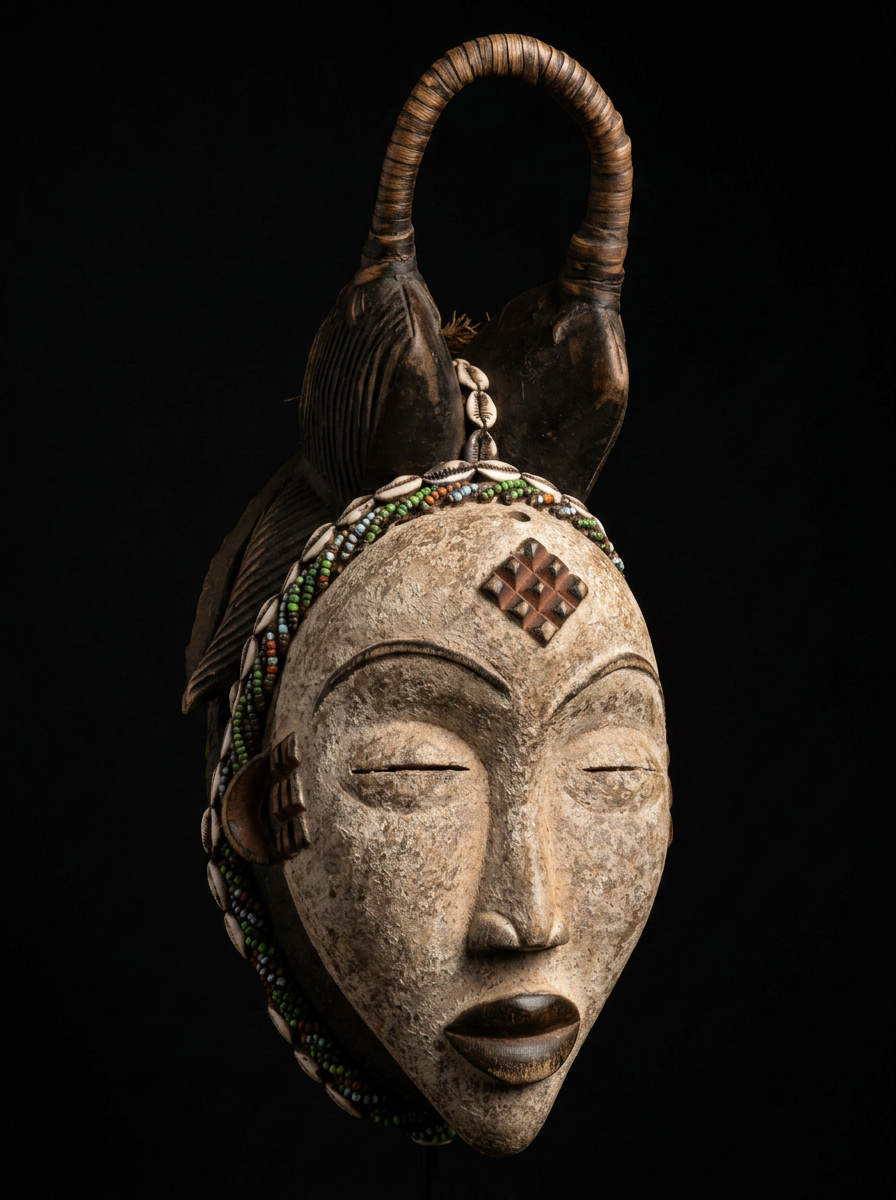
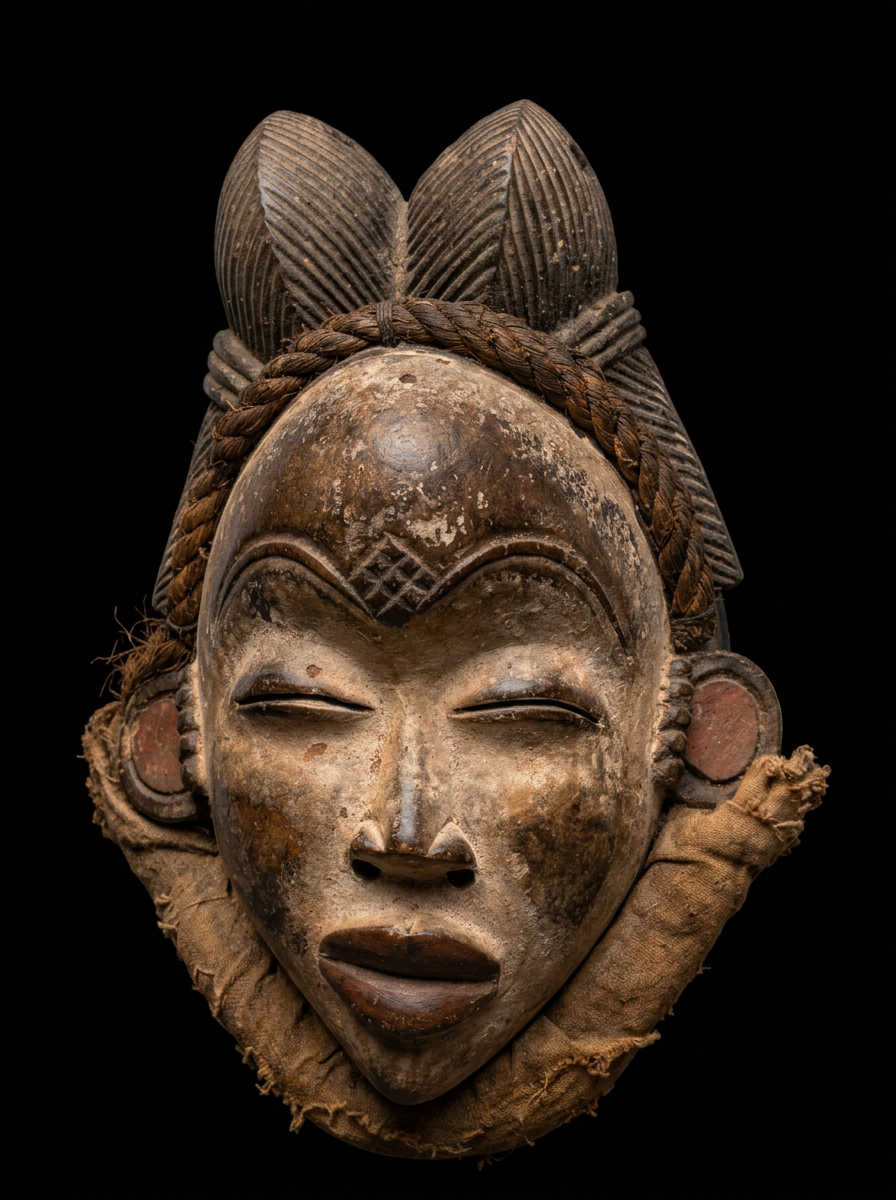
A mask like this one only ever came out at the end of something. Across much of Africa, white kaolin, the fine river clay ground and rubbed into the wood belongs to the dead and to the world they moved into. So when a whitened face stepped into the compound, usually at a funeral or at the closing of a long dispute, nobody greeted it by the dancer's name. The dancer had been covered head to foot in cloth precisely so that no one could. What walked in was an ancestor, come back for an evening to see how the living were managing.
The eyes are carved closed, and that is the whole argument of the piece: the dead do not need to look at you to know you. It would have been danced slowly, to drums rather than to song, while elders spoke the names of the family aloud. Afterwards it went back into the roof smoke of a keeper's house, which is why the wood underneath is dark and the white sits thin on the high points. The mouth is worn to almost nothing decades of breath, and of hands lifting it to a face. That wear is the only biography the mask offers, and it is enough to prove it was used, not made for a shelf.