Artist description
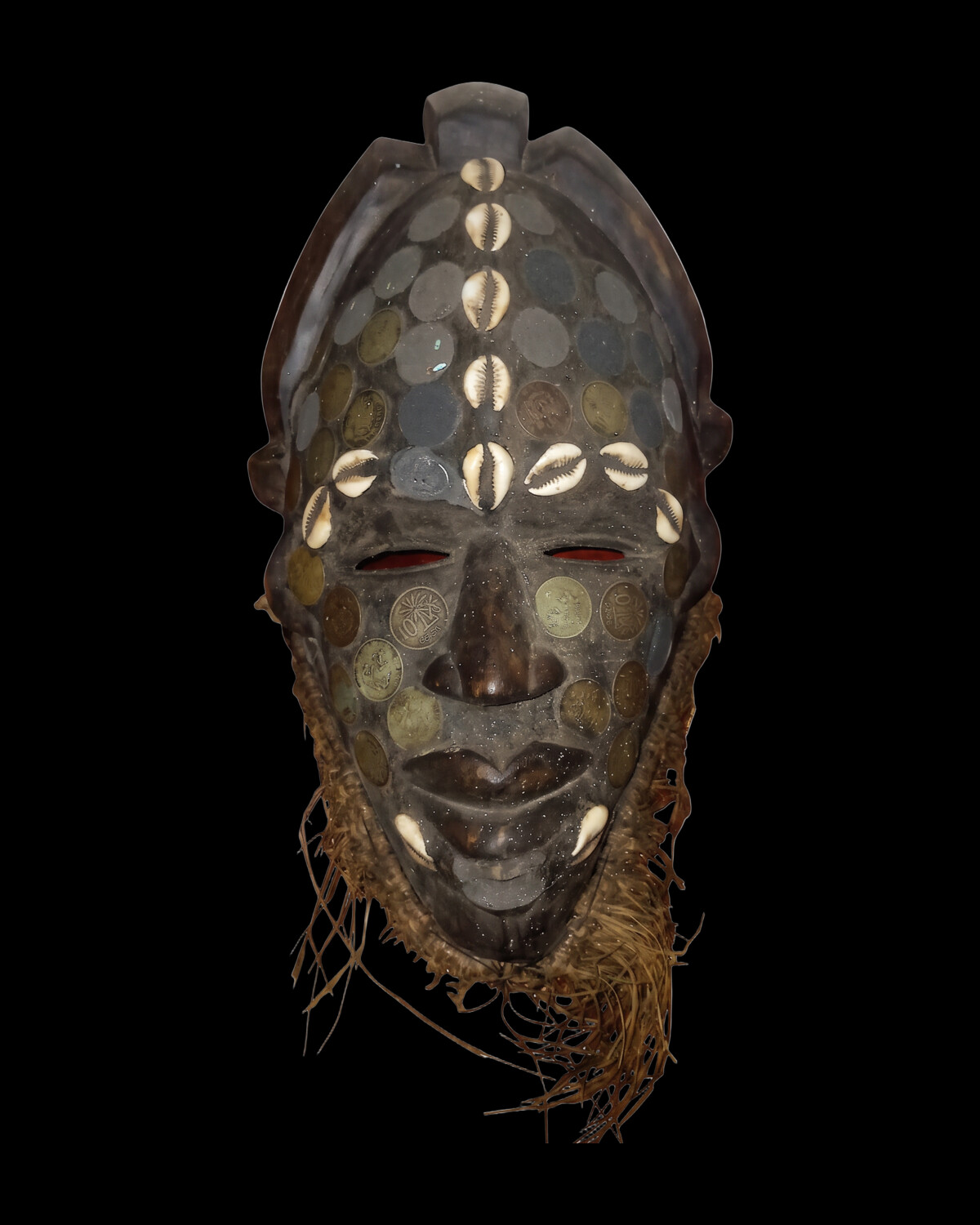
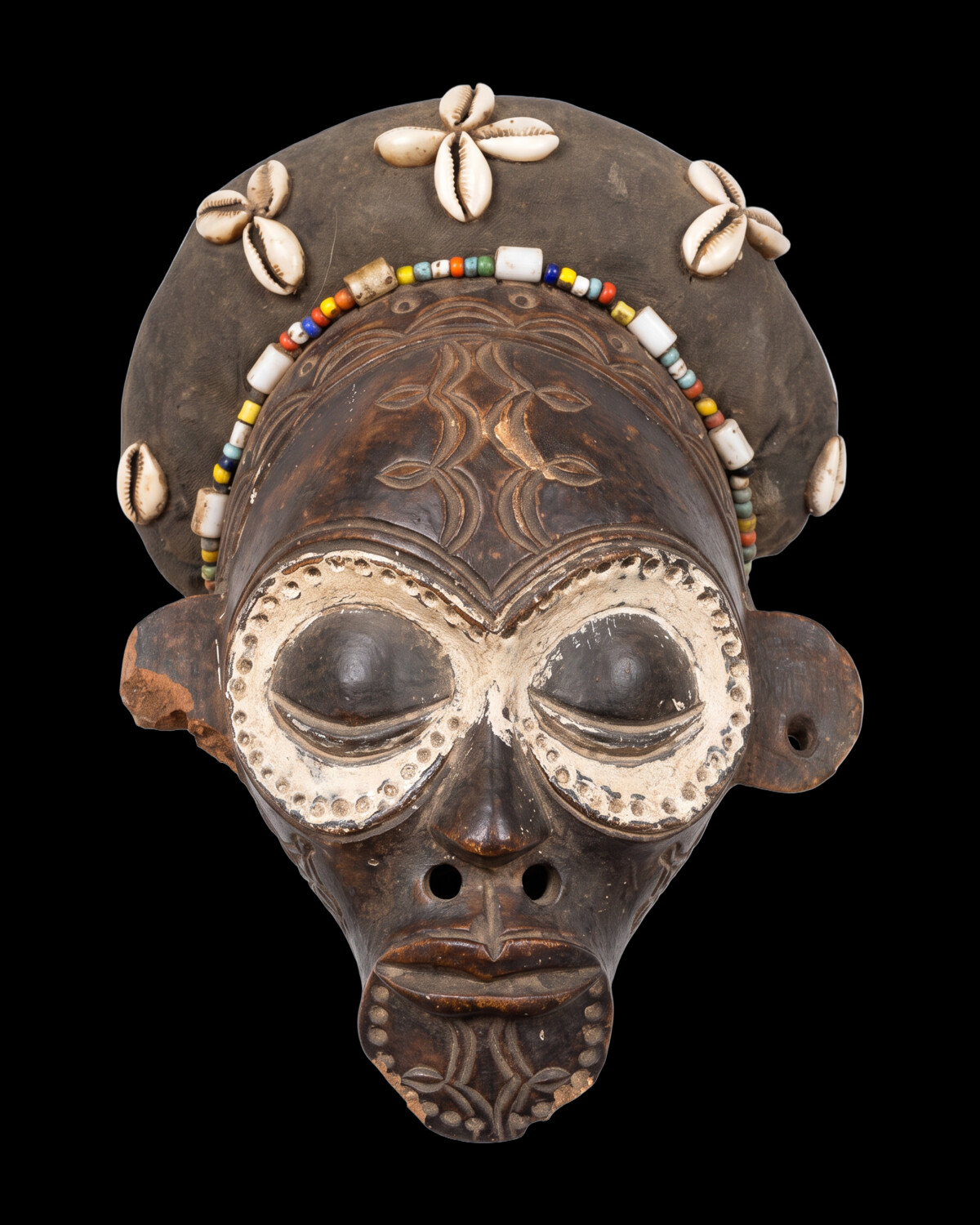
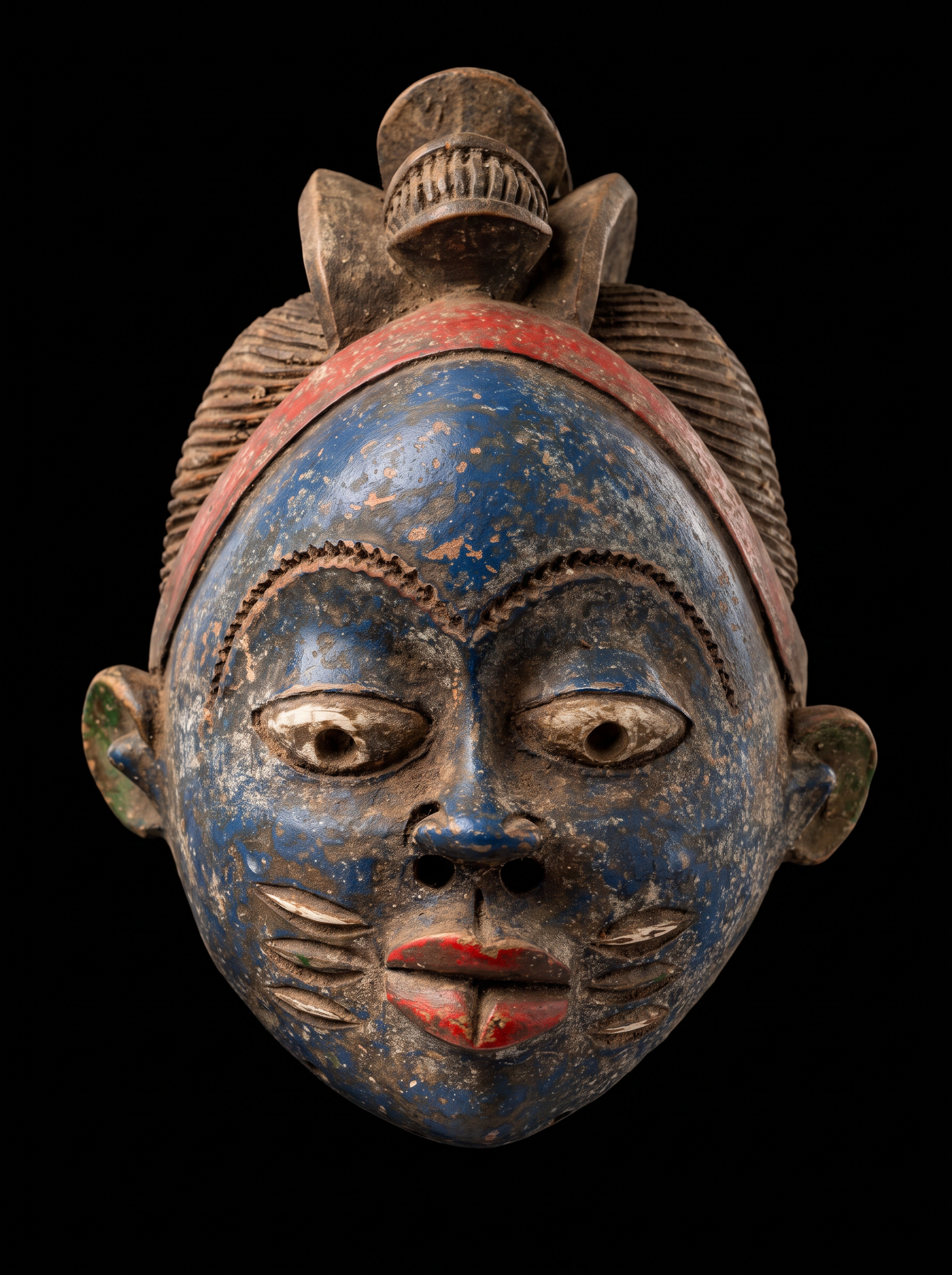
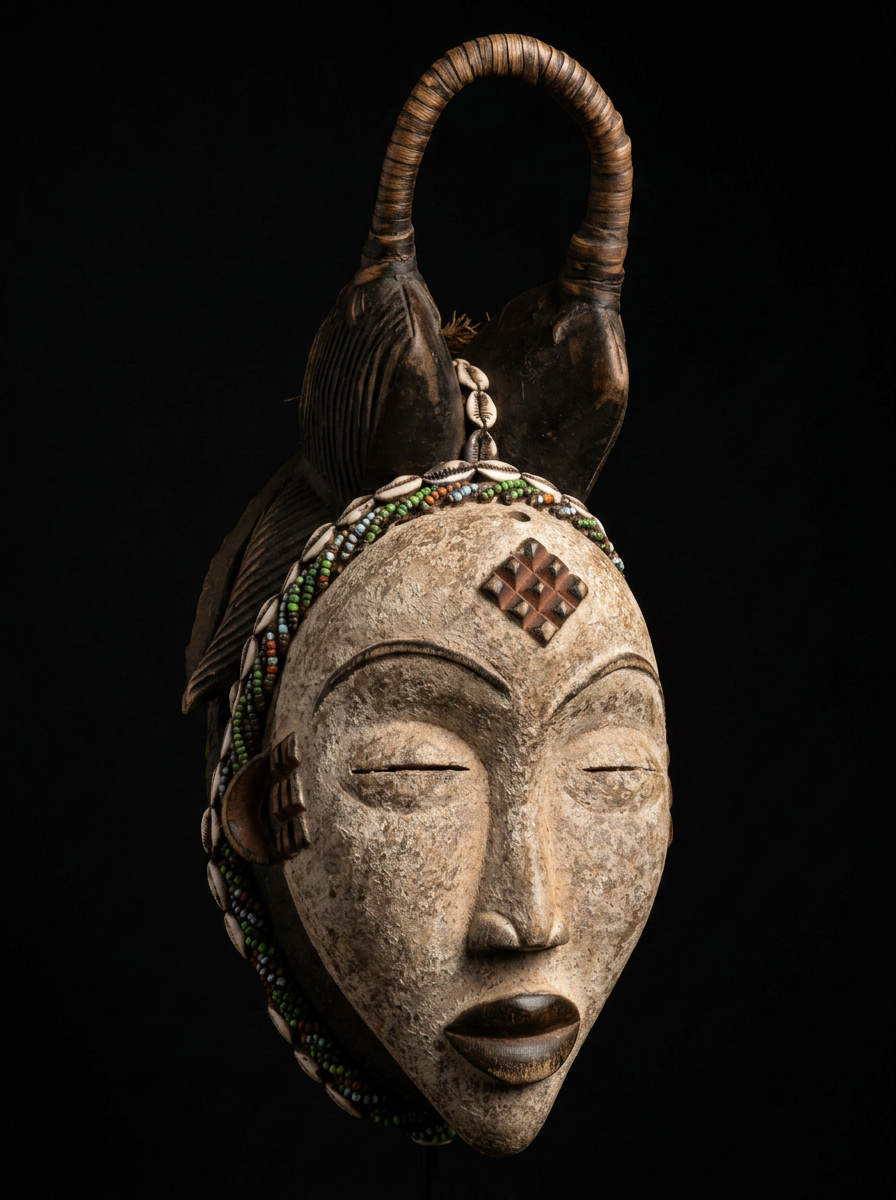
In the Grassfields a mask belonged to an association before it belonged to a dancer. The best documented of them is kwifon, the night society whose name is often glossed as the fon's other self: it judged disputes, carried what no one else was permitted to carry, buried chiefs, and when it had to, stood against the very ruler it served. Its masks did not perform for entertainment. When a face like this came out of the lodge, usually at a death or a judgement, nobody in the crowd was watching a man dance. They were watching a decision arrive.
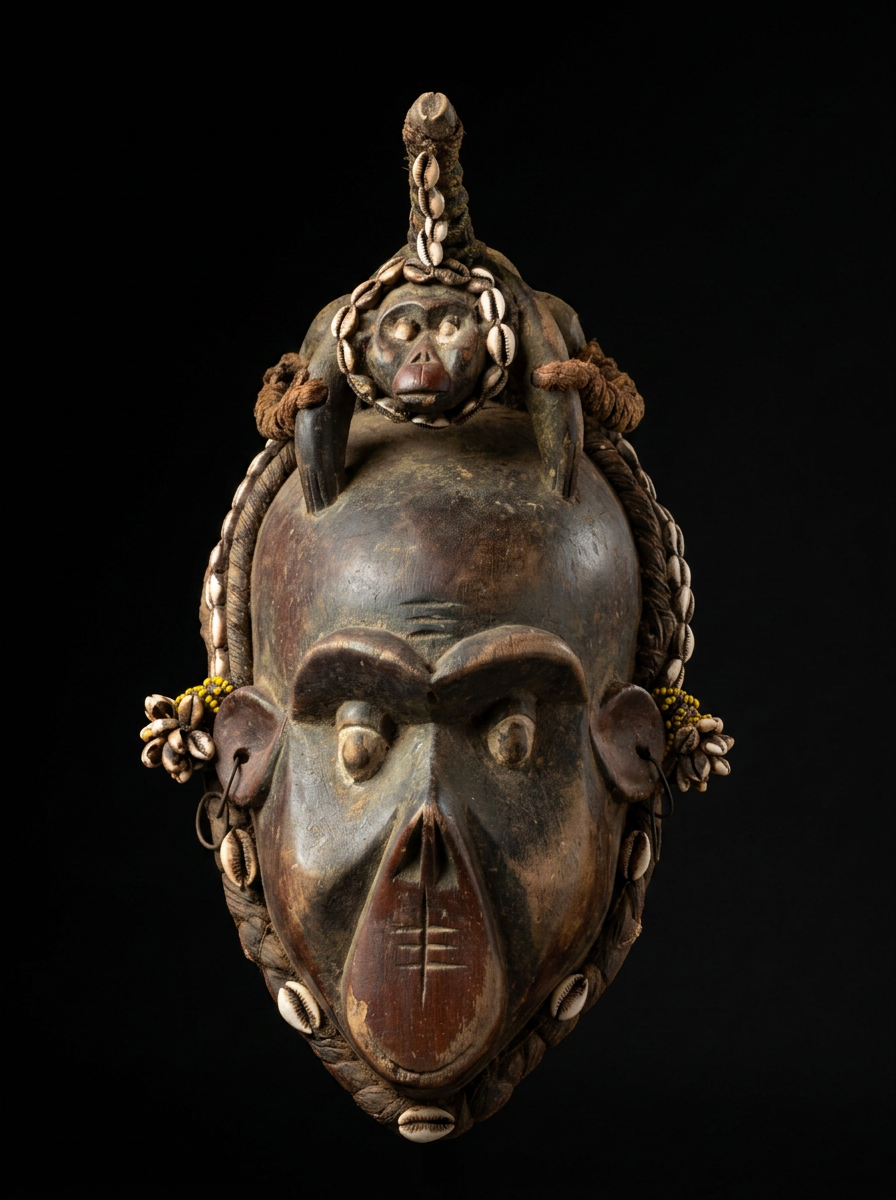
The small figure above the brow sits where the wearer can never see it, which tells you plainly who it was made for — one man wearing it, a body of men speaking through it. The collar is where the household shows: cowries stitched row on row, then imported glass beads along the browline, the newer money doing the older money's work. The wood is darkest at the mouth and at the rim, where breath and hands went for years.