Artist description
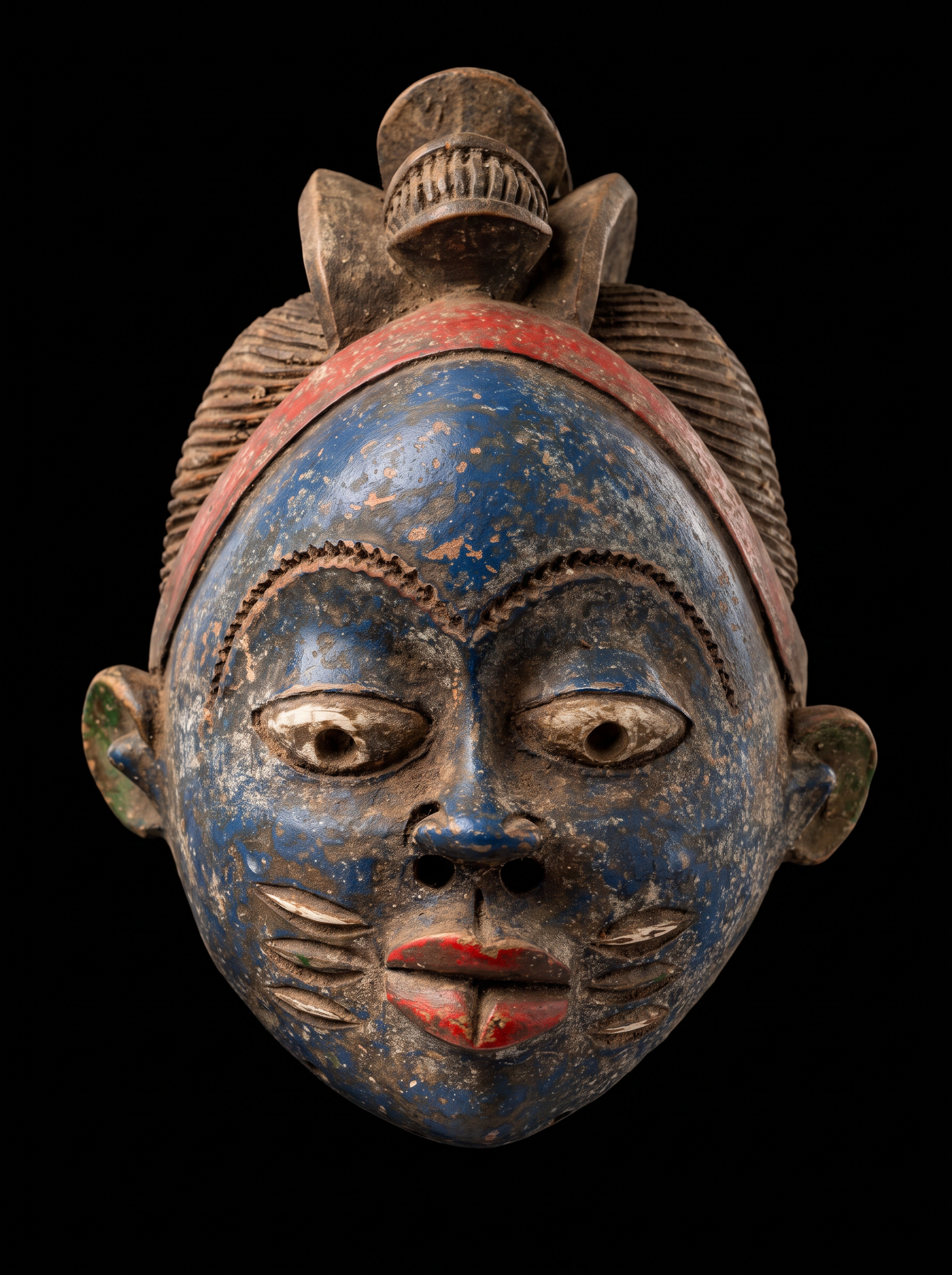
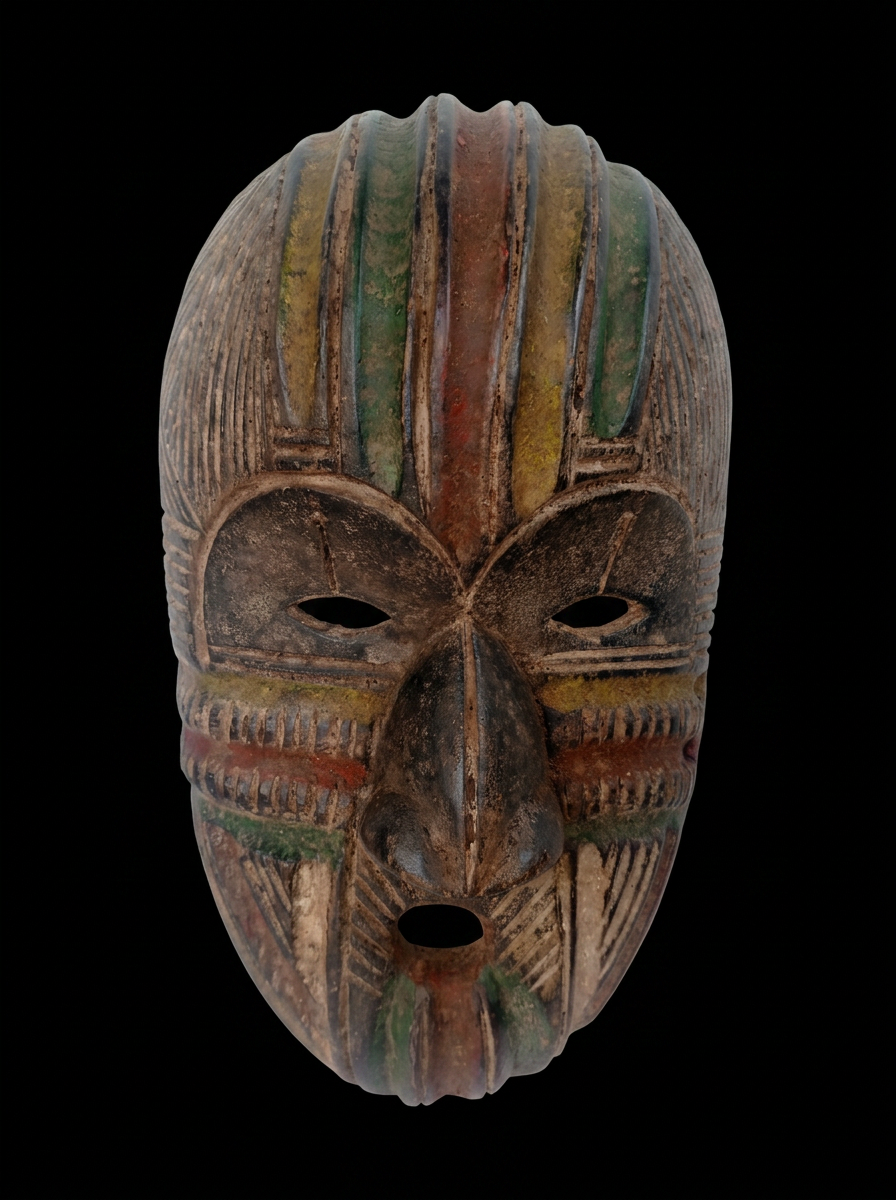
The carver cut the ridges before he thought about colour, so the pigment would have somewhere to sit and hold. You can feel them under a thumb, and in low light they throw shadows that redraw the face every time the head turns. That is a decision made for an open dance ground at dusk, with a crowd standing at a distance and drums setting the pace — not for a room with a lamp in it. Masks like this were meant to be legible from thirty paces, and everything about the surface is doing that job.
An earlier note of mine gave this piece to a named society. That was wrong, and I have taken it out rather than quietly soften it. What remains is honest: African, twentieth century, repainted at least once by someone who followed the old rows carefully — repainting was maintenance, not restoration, and it happened before a dance rather than after one. The rim is dark, the cord holes are stretched, and no amount of uncertainty argues with that kind of wear.